 EN
 FR
 JA
 RU
 ES
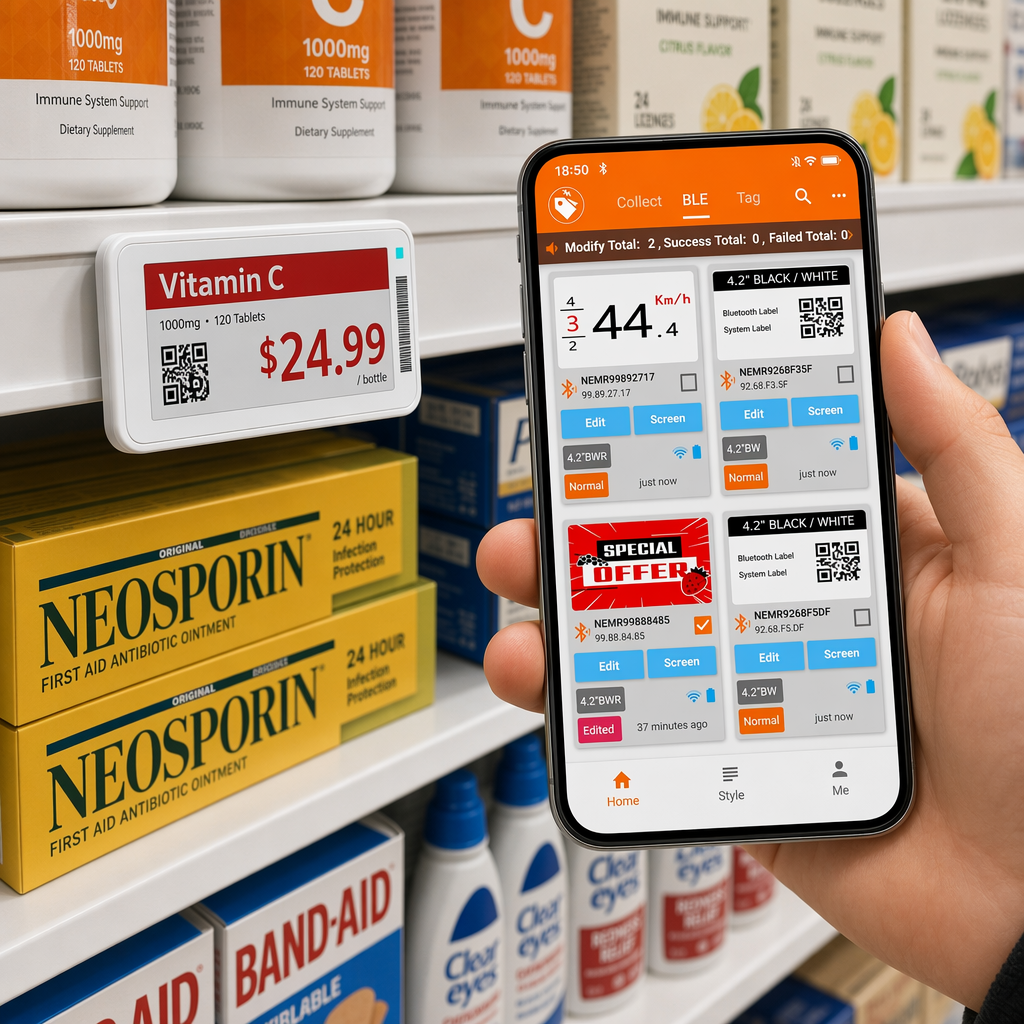
As retailers continue to embrace digital transformation, Electronic Shelf Labels (ESLs) are becoming an important part of modern retail operations. By replacing traditional paper price tags with electronic displays, retailers can simplify price management, reduce repetitive manual work, and improve the consistency of product information.
Behind every wireless ESL is a communication technology that enables the display to receive instructions and update its content. Among the technologies used in this field, Bluetooth Low Energy (BLE) has attracted attention for its low-power operation, flexible connectivity, and smartphone compatibility.
So, how does Bluetooth 5.0 improve ESL communication? What benefits can it bring to retailers, system integrators, and ESL solution providers? And what should businesses consider when choosing a Bluetooth-enabled electronic shelf label system?
Let's explore the technology and its practical applications.
1. What Is Bluetooth 5.0 and Why Does It Matter for ESL?
Bluetooth 5.0 is a version of the Bluetooth Core Specification introduced in 2016. It brought several enhancements to Bluetooth Low Energy (BLE), including support for higher data rates, extended-range communication modes, and improved advertising capabilities. These features give developers more flexibility when designing wireless devices.
For electronic shelf labels, wireless communication needs to balance several requirements:
- Low power consumption: ESLs commonly rely on small batteries and are expected to operate for extended periods.
- Reliable data transmission: Price information, product descriptions, and promotional content must reach the intended labels correctly.
- Flexible connectivity: Different retail applications may require smartphone connections, dedicated gateways, or integration with store management systems.
- Scalability: A retail deployment may involve hundreds or thousands of labels distributed across multiple aisles.
- Efficient content updates: The communication system should support the required update frequency without unnecessary energy consumption.
Bluetooth LE provides a foundation for designing solutions around these requirements. However, actual ESL performance depends on the complete system, including the Bluetooth chipset, antenna design, firmware, display technology, communication protocol, and software architecture.
2. Three Bluetooth 5.0 Features Relevant to ESL Communication
Bluetooth 5.0 introduced several technical improvements. Three are particularly relevant when considering wireless communication for electronic shelf labels.
2.1 Extended Range
Bluetooth 5.0 introduced the LE Coded PHY, which uses forward error correction to improve communication robustness and support longer transmission ranges under suitable conditions.
For ESL applications, extended-range communication may help designers plan wireless coverage across larger retail areas or locations where radio conditions are challenging.
However, the actual coverage depends on factors such as transmission power, receiver sensitivity, antenna design, obstacles, interference, and the selected Bluetooth configuration. Shelving, metal structures, refrigerated display cases, and store layouts can all affect wireless performance.
What this means for ESL: Bluetooth 5.0 gives developers additional options for designing wireless links, but gateway placement and real-world coverage testing remain essential.
2.2 Higher Data Transmission Speed
Bluetooth 5.0 introduced the LE 2M PHY, which supports a physical-layer data rate of up to 2 Mbps under the appropriate configuration.
This can provide a faster transmission option for supported Bluetooth LE devices. Depending on the product design and communication protocol, it may be useful when transferring data such as configuration information or display content.
For ESLs, the benefit depends on what is being transmitted. A short text change and a full display-image transfer have different data requirements. The final update time also depends on protocol overhead, connection setup, image size, processing time, and the number of labels being updated.
What this means for ESL: A higher supported data rate can provide more flexibility for data transfer, but it does not automatically guarantee faster updates across an entire store.
2.3 Enhanced Advertising Capabilities
Bluetooth 5.0 expanded Bluetooth LE advertising capabilities, including extended advertising for supported devices. Advertising allows devices to broadcast information without establishing a conventional connection for every transmission.
This is useful in applications where devices need to discover one another or exchange small amounts of information efficiently.
For electronic shelf labels, advertising can be part of device discovery, connection setup, or other communication designs. Nevertheless, Bluetooth 5.0 advertising alone is not a complete standardized communication solution for managing thousands of ESLs.
Large-scale ESL systems require carefully designed device addressing, scheduling, acknowledgement, security, and network management mechanisms.
What this means for ESL: Bluetooth 5.0 gives engineers more tools to design wireless communication, while the overall ESL architecture determines how efficiently those tools are used.
3. How Bluetooth-Enabled ESLs Benefit Retailers
Bluetooth technology can contribute to several practical benefits when it is implemented appropriately in an ESL solution.
More Convenient Price Management
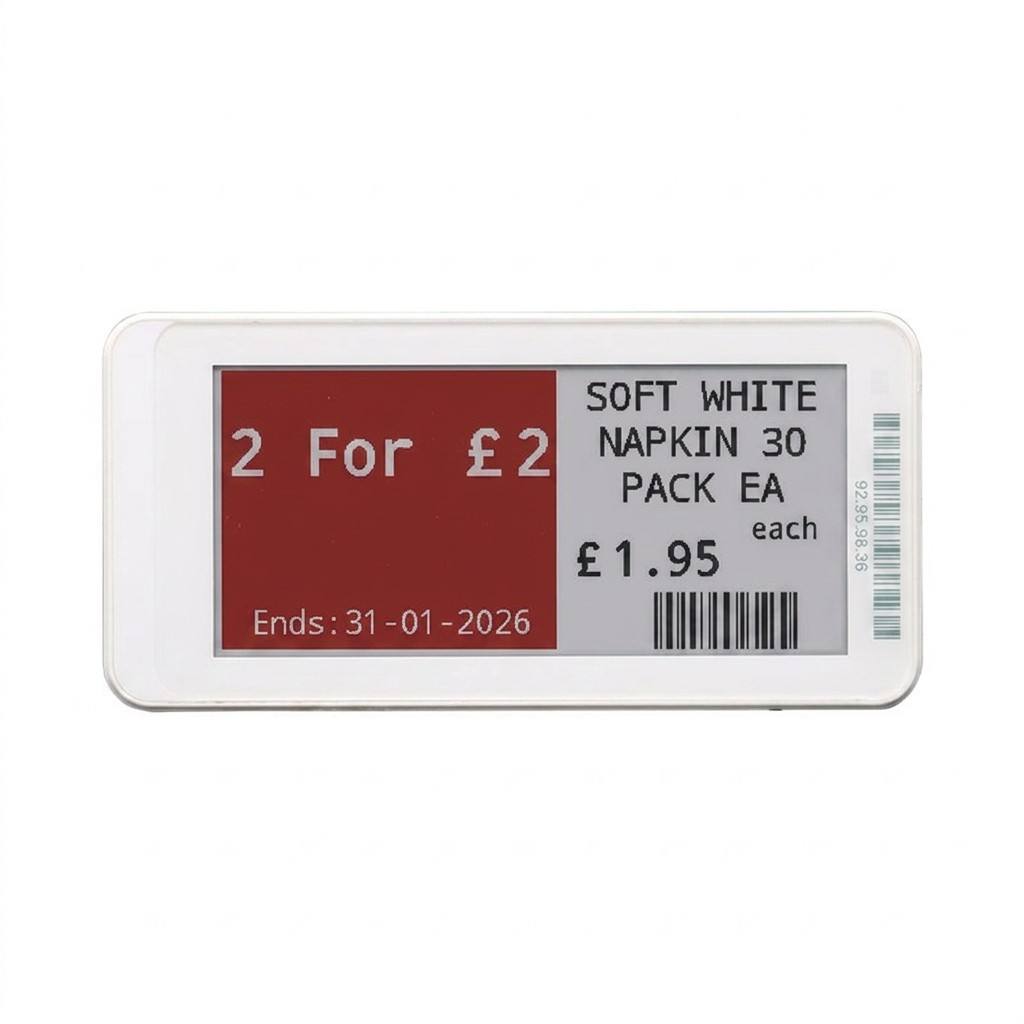
Electronic shelf labels allow retailers to change displayed prices and product information through a management system instead of manually printing and replacing paper tags.
For stores that frequently adjust prices or run promotions, this can reduce repetitive shelf-maintenance work. The actual time savings depend on store size, the number of labels, the update workflow, and the existing price-management process.
Flexible Deployment Options
Bluetooth-enabled products can support different installation approaches, including direct smartphone connections for certain applications and gateway-based communication for managed retail deployments.
This flexibility can help solution providers design products for different customer requirements, from small independent shops to more complex retail environments.
Opportunities for Product Innovation
Bluetooth connectivity can enable features such as mobile configuration, device setup, and communication with compatible management applications.
For developers and system integrators, the availability of established Bluetooth development tools and components can also provide a foundation for creating customized retail devices.
Support for Broader Retail Digitalization
ESLs can serve as one component of a larger digital retail environment. Depending on the system design, electronic labels may be integrated with POS software, product databases, inventory systems, or promotional management platforms.
The key is to ensure that the wireless communication layer, software interface, and retail workflow are designed to work together.
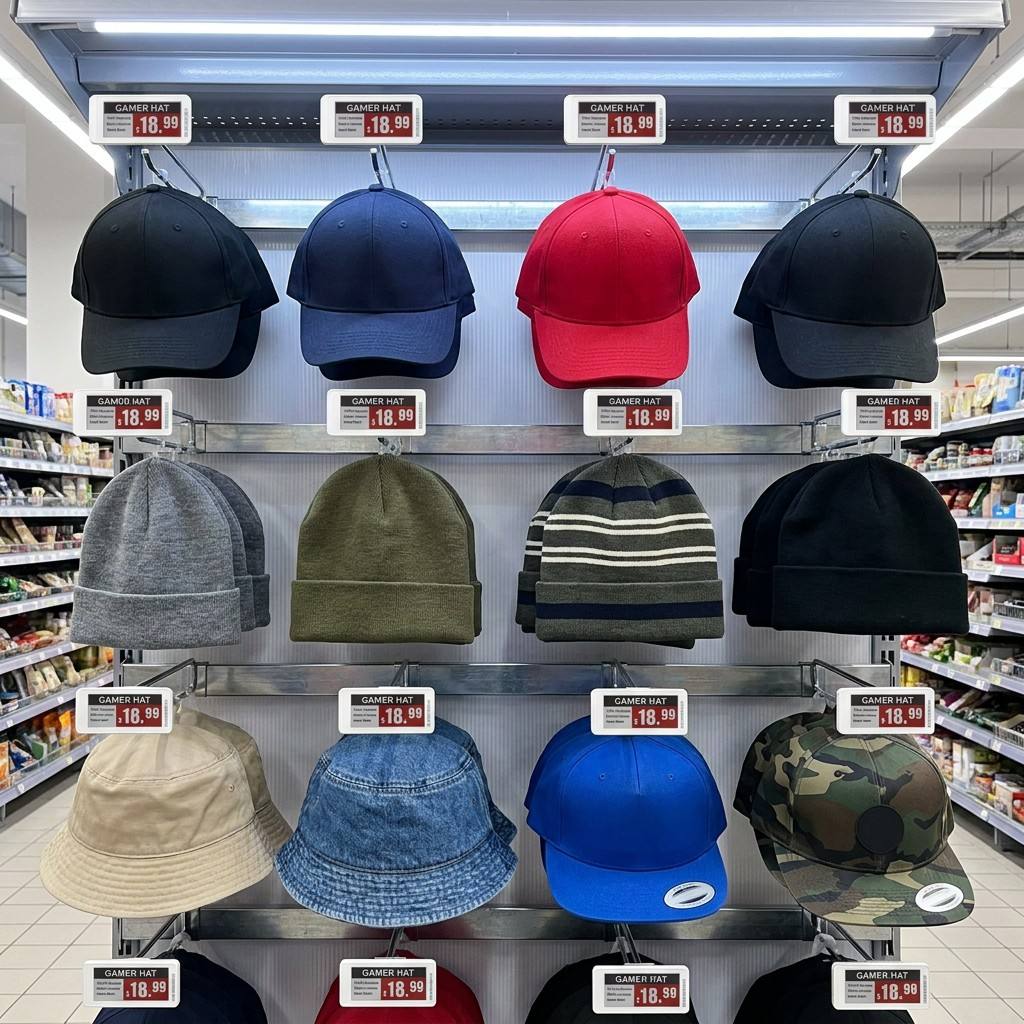
Picksmart ESL (Electronic Shelf Label) Bluetooth Solution
At Picksmart,we provide electronic shelf label and e-paper display solutins for retail,business and customized applications.Our bluetooth-enabled product options can support different use cases depending on the model and its software configuration.For example,selected small-format ESL products can be updated through a compatible smartphone application,making then suitable for application that prioritize convenient local content changes.If customers want to develop your own software based on our hareware,it is welcomed to provide the API for our customers.Whether you are developing a Bluetooth-enabled price tag,a moblie-app-controlled e-paper display,or ESL project with specific integration requirements,selecting the appropriate communication method is important step toward a successful implementation.