 EN
EN
 FR
FR
 JA
JA
 RU
RU
 ES
ES
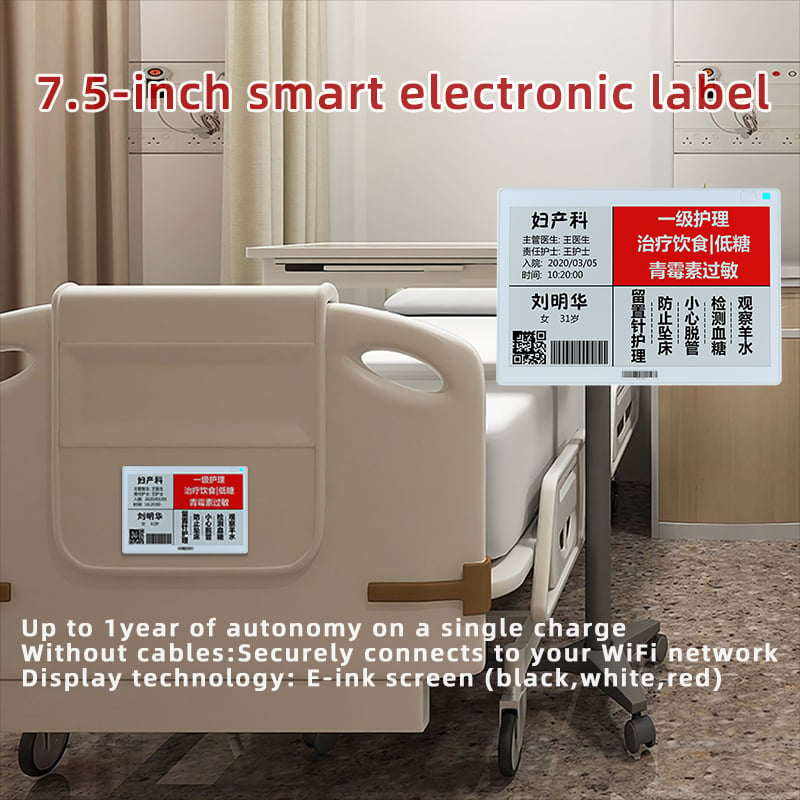
In response to the practical pain points of traditional paper bedside cards, such as slow information update, easy errors, and high daily operation and maintenance costs, the 7.5-inch electronic ink screen label is equipped with a communication base station and a smart management platform, forming a complete digital management system for hospital information. The core information of the patient's basic information, diagnosis and treatment instructions, and dietary requirements can be sent in batches through the management back office, and be synchronized to the terminal screen in seconds. There is no need for medical staff to manually replace paper cards during the whole process, which can effectively improve the efficiency of information flow and information accuracy in the ward, and significantly reduce the burden of first-line operations and maintenance.
Compared with traditional bedside information cards, what are the advantages of the electronic paper solution?
Improving quality and efficiency to support the digital transformation of smart hospitals
The plan deeply connects with the hospital HIS system, and the patient's basic information, nursing level, and medical order adjustment can be automatically synchronized and updated, replacing the manual handwriting replacement operation process, and significantly improving the nursing management efficiency of the ward while realizing the digital trace of the whole process of nursing information.
Reducing carbon emissions and energy consumption to set a new benchmark for green healthcare
Completely replace paper bedside cards, achieve zero printing, zero ink, zero paper consumption, significantly reduce material procurement and waste disposal costs, implement green medical concepts with lightweight and low-power technology, and help hospitals build a low-carbon and environmentally friendly ward environment.
Gentle lighting for a restful night’s sleep, eliminating light pollution in hospital wards
The e-ink display technology used features no backlighting, eliminating blue light and screen flicker, whilst offering a soft, paper-like appearance that is gentle on the eyes. With no screen glow to cause disturbance at night, it is perfectly suited to hospital wards, completely addressing the issue of traditional illuminated displays disrupting patients’ rest and affecting their sleep quality.
This solution not only precisely solves the industry pain points of low efficiency and high cost that have long existed in the traditional ward management, but also fully verifies the high adaptability of the star flash technology's core characteristics of low latency, anti-interference, high concurrency, and low power consumption to the medical scene. The combination of electronic ink screen and medical system promotes the replication of mature solutions in more medical institutions, injecting fresh vitality into the medical industry.
Disclaimer: This article is reposted from another platform and does not represent the views and positions of our website. In case of infringement or objection, please contact us for deletion. Thank you!