 EN
 FR
 JA
 RU
 ES
Electronic Shelf Labels (ESLs) are becoming an important part of retail digital transformation. As retailers seek to reduce manual work, improve pricing accuracy, and modernize store operations, electronic price tags are evolving beyond simple digital displays.
Recent industry developments highlight three key trends shaping the ESL market in 2026.
1. ESL Adoption Is Expanding Across Global Retail Markets
Retailers across Europe and Asia are increasingly exploring electronic shelf labels to improve operational efficiency.
Recent developments include ESL deployment initiatives involving Pricer and Orange in France, as well as Hanshow and Kenty Adria in Croatia and Slovenia. In Japan, labor shortages and the need to reduce repetitive tasks are also encouraging retailers to adopt electronic price tags and large-format e-paper signage.
These developments reflect growing interest in digital shelf management. By replacing manually printed price tags, ESL systems can help retailers simplify price changes, maintain consistent product information, and reduce repetitive shelf-maintenance work.
For retailers operating multiple stores, centralized management can also make it easier to coordinate approved pricing updates across locations.
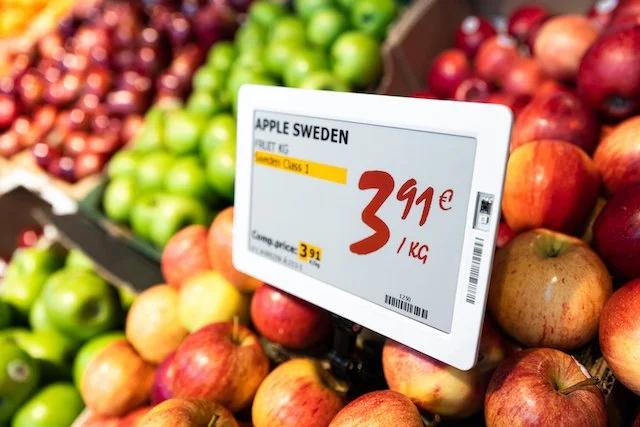
2. Energy Efficiency and Smarter Displays Are Becoming More Important
Energy consumption and maintenance requirements are important considerations when deploying thousands of electronic shelf labels.
Manufacturers are exploring ways to improve battery efficiency and develop alternative power solutions. For example, Hanshow introduced its Nebular Lux ESL at NRF 2026 Europe, featuring a hybrid energy architecture designed to supplement battery power with ambient indoor light.
At the same time, electronic display applications are expanding beyond conventional shelf-edge price tags. Large-format e-paper signage can display promotional content, product information, and in-store communications.
Because electronic paper can retain a static image without continuous power to maintain the display, it can be useful for applications where content changes periodically rather than continuously.
For retailers, the key considerations include battery life, update frequency, maintenance costs, display requirements, and installation conditions. Choosing the right combination of hardware and communication technology helps ensure that the solution fits the intended application.
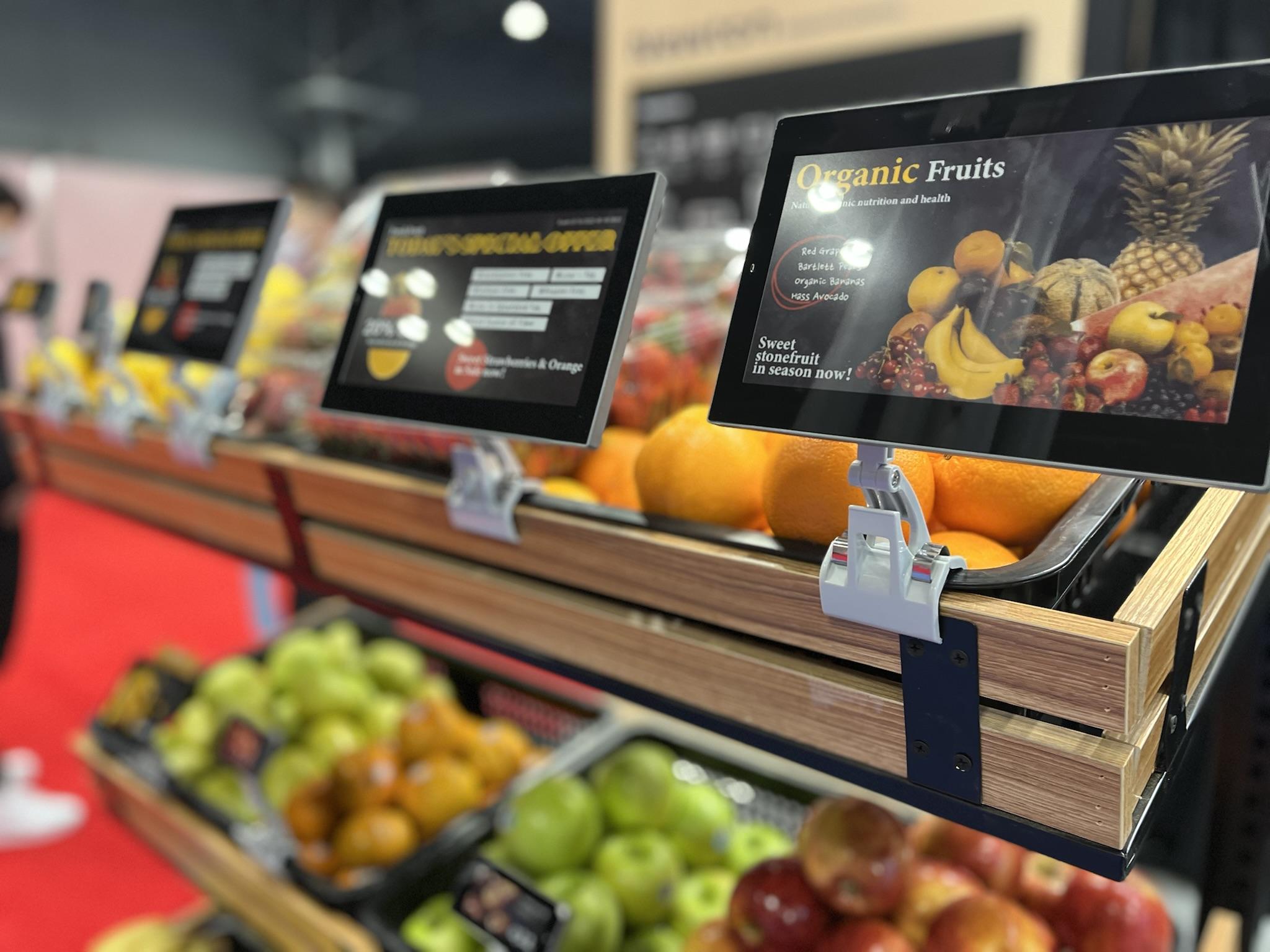
3. System Integration and Price Transparency Matter More Than Ever
Modern ESL systems are increasingly connected to retail software, including POS, ERP, and product management platforms.
When properly integrated, electronic shelf labels can help retailers synchronize approved pricing information with shelf displays, reduce discrepancies between shelf and checkout prices, and simplify promotional management.
However, successful implementation requires more than selecting the right label. Retailers should also evaluate communication coverage, software compatibility, update verification, security, and the ability to expand the system as store requirements grow.
Price transparency is another important consideration. Electronic labels make it easier to distribute price changes, but pricing policies and approval procedures remain the retailer's responsibility. Clear controls and accurate data synchronization are essential for maintaining customer trust.
At Picksmart, we provide electronic shelf labels in multiple sizes, selected Bluetooth-enabled models, and e-paper display solutions for different applications. We also welcome discussions with retailers, distributors, and system integrators seeking customized hardware and integration options.
The ESL market in 2026 is being shaped by three major trends: expanding retail adoption, greater attention to energy efficiency, and deeper integration with retail management systems.
For retailers, the right ESL solution should address practical operational needs while providing reliable communication, appropriate display options, and long-term value.