 EN
EN
 FR
FR
 JA
JA
 RU
RU
 ES
ES

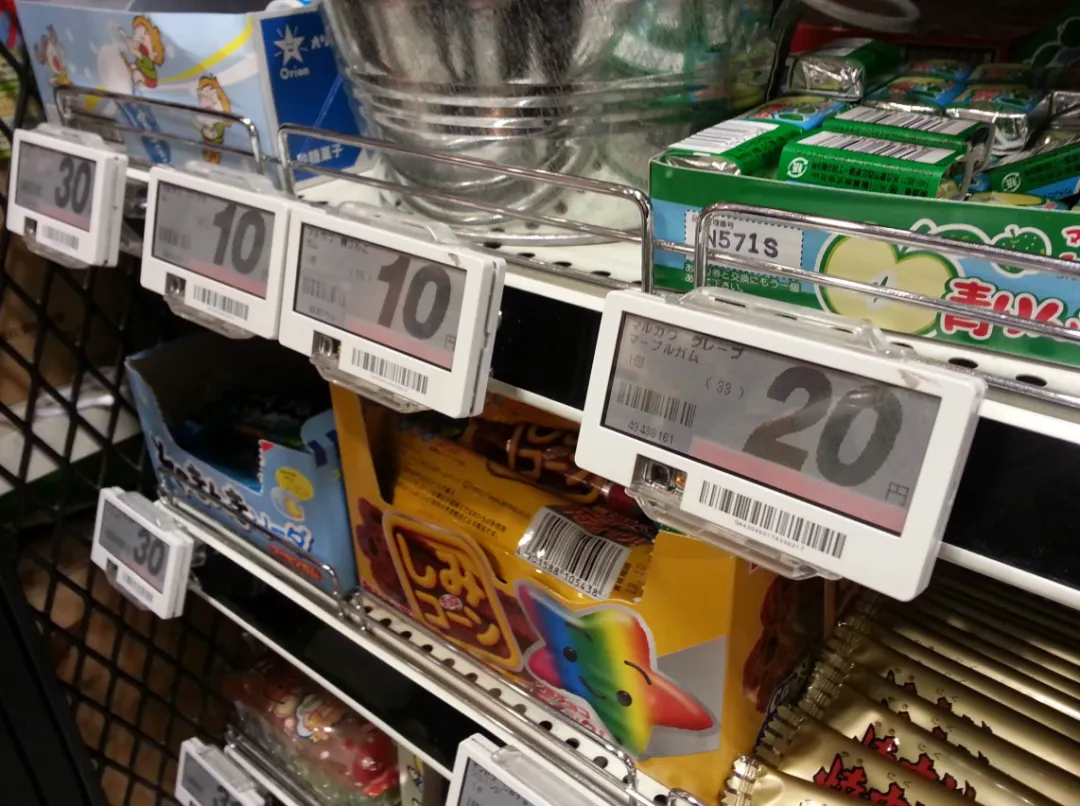
12 October: Solum is expanding its electronic shelf label (ESL) and large-format e-paper signage businesses in response to labour shortages and the demand for in-store automation within the Japanese retail sector.
Demand for digital transformation in the Japanese retail sector continues to grow, with the aim of reducing repetitive tasks such as changing price tags and managing in-store signage. Data from the Japanese credit reference agency Teikoku Databank shows that in July 2026, 51.3 per cent of companies reported a shortage of permanent staff; this figure has exceeded 50 per cent in the July survey for four consecutive years. In the food retail sector, which includes supermarkets, the proportion of companies facing a shortage of permanent staff reached 50.0 per cent in April this year, an increase of 5.6 percentage points compared with the previous year.
The ‘2025 Annual Supermarket Statistical Survey’, jointly published by Japan’s three major supermarket associations, revealed that the recruitment completion rate for permanent staff among supermarket operators stood at just 75.5 per cent of the required headcount, whilst the completion rate for part-time and temporary staff was 79.4 per cent. In the same survey, when asked to identify the industry’s main operational challenges, 86.3 per cent cited improving profitability, and 73.0 per cent cited staff recruitment and training.
On the retail front line, price-tagging management is one of the tasks requiring continuous manpower. As food retailers frequently launch special offers, limited-time promotions or update origin information, staff must repeatedly create, print and affix price tags to shelves.
The roll-out of in-store automation initially centred on the checkout. The proportion of supermarket operators equipped with self-service checkouts rose from 31.1 per cent in 2023 to 41.7 per cent in 2025. In contrast, only 18.2 per cent of companies have introduced electronic price tags as a means of improving operational efficiency, indicating that the digitalisation of shelf management remains at a relatively low level.
Against this backdrop, there has been a steady increase in the number of Japanese retail companies adopting electronic price tags. Aoki Supermarkets, which operates 51 stores in Aichi Prefecture, began rolling out electronic price tags in phases from July 2025, with the aim of completing deployment across all stores by the end of 2026. The Japanese IT firm BIPROGY is responsible for system development and maintenance, whilst the terminals are equipped with Solome’s four-colour electronic price tag product, ‘Newton ESL’.
Aoki Supermarket has integrated its POS system with electronic price tags to minimise discrepancies between shelf prices and checkout prices; it also plans to utilise the price tag’s flashing function to manage products nearing their use-by dates. Reducing the work involved in producing, printing and replacing price tags due to price adjustments or changes in country of origin is also one of the key objectives of this implementation.
Solumei is also expanding its product range beyond electronic price tags to include large-format e-paper signage. As e-paper only consumes power when the display is updated, it can be battery-powered and installed on walls, display racks and other locations without the need for additional cabling. Content can be updated remotely, reducing the workload involved in repeatedly replacing paper posters and in-store signage.
Solumei continues to advance its partnerships in the Japanese market. From 8 to 9 October, the company joined forces with BIPROGY to set up a joint stand at the Asia-Pacific Retail Conference (APRCE 2026), held at the Tokyo International Forum. The exhibition showcased large-format e-paper signage in A1, A2 and A3 sizes, alongside full-colour electronic price tags, demonstrating application solutions that allow in-store display content to be switched according to specific time slots.
A representative from Solomei stated: “The labour shortage in Japan’s retail sector persists, and there is growing market demand to reduce the frequency of tasks such as replacing price tags and in-store signage. Building on our partnership with BIPROGY, the company will utilise electronic price tags and large-format e-paper signage to support the digital transformation of retail outlets.”
Disclaimer: This article is reposted from another platform and does not represent the views and positions of our website. In case of infringement or objection, please contact us for deletion. Thank you!