 EN
EN
 FR
FR
 JA
JA
 RU
RU
 ES
ES

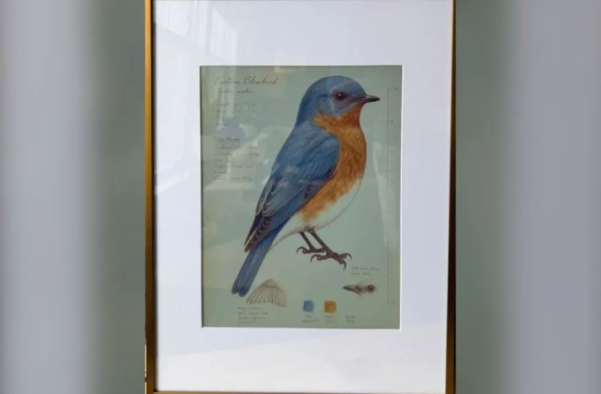
When the therapeutic appeal of birdwatching, the artistic charm of field journaling and the geeky romance of building your own server come together, what kind of creative work might emerge? International creator veteranbv has provided the perfect answer. By deeply integrating these three personal interests, he has created the Inky Bird Frame, an e-ink display device that automatically captures data on nearby birds and generates hand-drawn-style field guides. Since its debut on the Raspberry Pi subreddit, it has garnered widespread acclaim from nature enthusiasts and tech-savvy hobbyists alike.
The key appeal of this niche and unique device has never been its high-end hardware specifications, but rather its meticulous reimagining of publicly available nature data. It eschews cold, dry lists of data, transforming real bird sightings recorded in the vicinity of the user’s home into a field guide with a delicate, hand-drawn aesthetic. As these images quietly cycle across the e-ink screen, they add a touch of natural charm to the walls of the home, achieving a perfect fusion of natural data and domestic aesthetics.
The operational logic of the complete Inky Bird Frame system is clear and ingenious, with a distinct division of labour between software and hardware that balances stability with practicality. On the hardware side, the device is equipped with two Raspberry Pi units, each performing its own specific function without interfering with the other: the Pi Zero 2 W is dedicated to driving the e-ink display, handling the ‘artwork’ of image rendering and display; the more powerful Pi 4 serves as the core controller, handling all complex computational tasks such as data acquisition, filtering, generation and validation. This clear division of labour ensures the entire system runs smoothly, avoiding the lag that would result from a single device attempting to handle multiple tasks simultaneously.
To cater to observation needs in different scenarios, the device also supports customisable data rules, offering maximum flexibility. Users can freely set the data retrieval radius to precisely pinpoint bird sightings within a few kilometres of their home, focusing on the natural ecology in their immediate vicinity; they can also adjust the time window to retain records of birds that have appeared recently. This design strikes an excellent balance between visual appeal and the preservation of rare sightings, ensuring that rare birds visiting by chance are not instantly overwritten by new entries, so that every precious encounter with a rare bird can be preserved and recorded.
Most innovative of all is the device’s fully automated field guide generation pipeline. When the system detects a new bird species never before recorded in the local database, it automatically initiates a comprehensive creation process: first, it gathers compliant, commercially usable licensed reference material; then, using the AI model Codex, it transforms this material into a species guide that matches the style of a field sketchbook, faithfully recreating the texture of a natural sketch. What is particularly remarkable is that the device does not simply display the content as soon as it is generated; it also automatically verifies the accuracy of the content. Only after ensuring that the species’ characteristics and detailed depictions are authentic and reliable is the illustration added to the local gallery, thereby guaranteeing the accuracy of the educational content from the outset.
The final bird illustrations are displayed in a continuous loop on the e-ink screen. Unlike the luminous quality of traditional screens, e-ink displays do not emit their own light and retain the image after a refresh, faithfully reproducing the texture of printed paper and hand-drawn sketches. When hung on a wall, from a distance they appear as a series of warm, hand-drawn illustrations rather than cold digital screens, perfectly complementing the aesthetic of home décor.
It is worth noting that this device has deliberately eschewed the ‘real-time refresh’ and ‘millisecond-level response’ sought after by mainstream smart devices. Due to the physical limitations of the e-ink display, coupled with the controller’s use of a timed data-retrieval mode, it is unable to provide real-time dynamic updates. Yet this ‘slow pace’ is precisely the masterstroke of the entire design.
Disclaimer: This article is reposted from another platform and does not represent the views and positions of our website. In case of infringement or objection, please contact us for deletion. Thank you!