 EN
EN
 FR
FR
 JA
JA
 RU
RU
 ES
ES
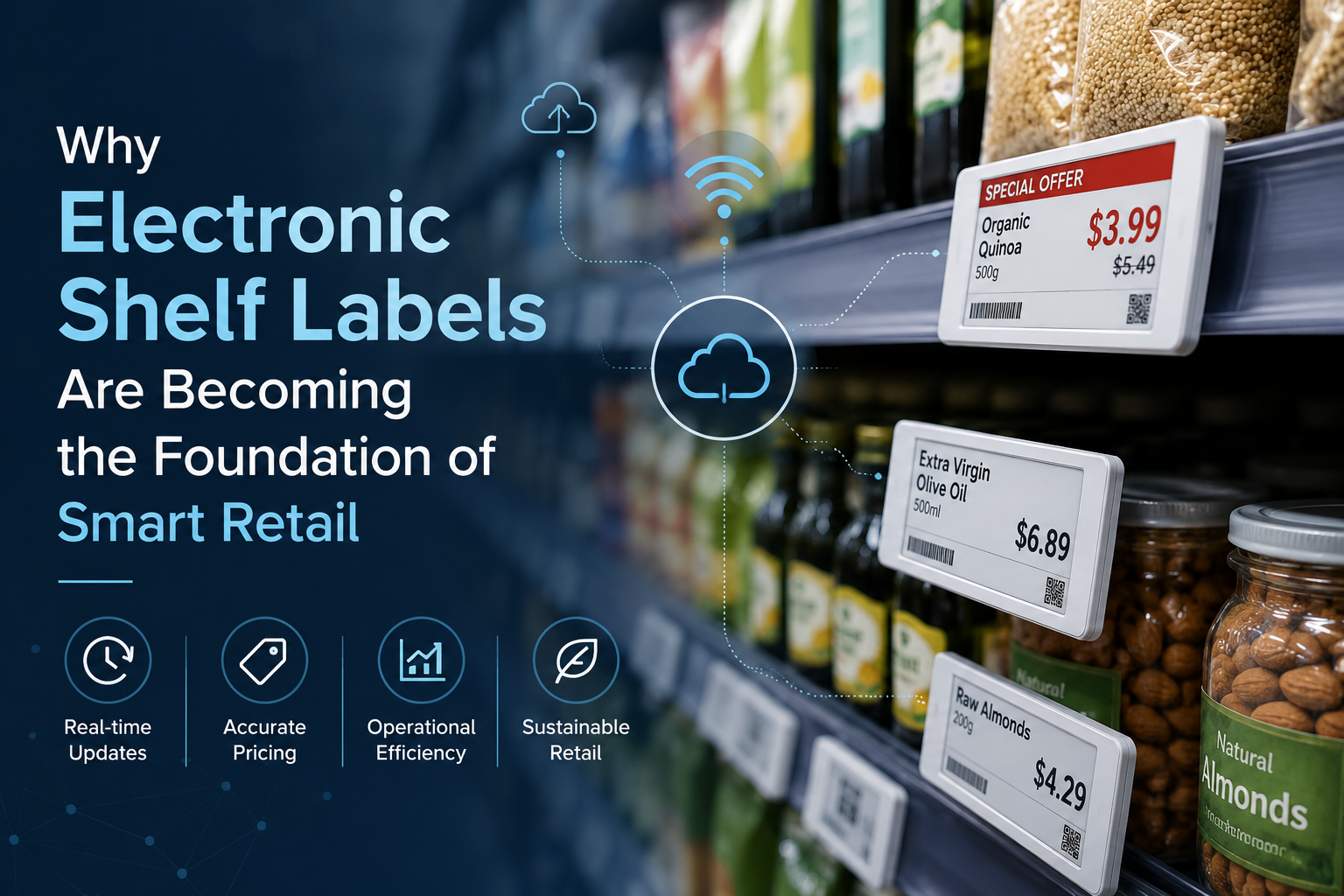
The retail industry is changing faster than ever. Rising labor costs, increasing customer expectations, and the rapid development of technologies such as IoT, RFID, and artificial intelligence are pushing retailers toward smarter and more automated operations. In this transformation, Electronic Shelf Labels (ESLs) are emerging as one of the most valuable technologies for modern stores.
Traditionally, retailers have relied on paper labels to display prices and product information. While simple, this approach creates significant operational challenges. Every price change requires manual work, from printing new labels to replacing them on shelves. In large supermarkets or chain stores, these tasks consume considerable time and labor while increasing the risk of pricing errors.
Electronic Shelf Labels solve this problem by allowing retailers to update prices and product information digitally and instantly. Connected through wireless networks, ESLs ensure that shelf prices remain synchronized with central management systems. What once took hours can now be completed within minutes.
The growing adoption of ESL technology is closely linked to the rise of IoT and RFID in retail. These technologies allow stores to collect real-time data, automate workflows, and improve inventory visibility. RFID has already transformed inventory tracking and stock management, while IoT devices help retailers monitor operations and respond quickly to changing market conditions. ESLs act as an important bridge between digital systems and physical shelves, enabling retailers to create a truly connected store environment.
Beyond operational efficiency, ESLs are also changing how retailers interact with customers. Modern consumers expect accurate information, personalized experiences, and seamless connections between online and offline shopping channels. Digital labels can display not only prices but also promotional messages, QR codes, loyalty program information, and product details. This creates more opportunities to engage customers directly at the point of purchase and strengthen brand loyalty.
At the same time, software is becoming just as important as the labels themselves. Today’s ESL platforms integrate with ERP systems, POS software, inventory management solutions, and even AI-driven analytics tools. Retailers can use data collected from these systems to optimize inventory levels, improve pricing strategies, and respond more quickly to customer demand. As artificial intelligence continues to evolve, ESL systems will become an even more powerful tool for data-driven decision making.
Of course, the retail industry also faces challenges. The rapid growth of e-commerce has changed consumer behavior and increased competition for physical stores. To remain competitive, retailers must offer shopping experiences that online channels cannot easily replicate. Smart technologies such as ESLs help bridge this gap by improving store efficiency while delivering a more modern and engaging customer experience.
Another concern often discussed in the retail sector is data privacy. As technologies such as RFID and connected devices become more common, consumers are paying closer attention to how information is collected and used. Retailers must ensure that smart retail solutions are implemented responsibly, with strong security measures and clear communication regarding data protection.
Looking ahead, the future of retail will be increasingly automated, connected, and intelligent. Electronic Shelf Labels are no longer simply digital price tags—they are becoming a key component of the smart retail ecosystem. By combining real-time communication, automation, and data analytics, ESLs help retailers reduce costs, improve accuracy, and create better shopping experiences.
For retailers planning their next stage of digital transformation, investing in Electronic Shelf Labels is not just about replacing paper labels. It is about building a smarter, more efficient, and future-ready retail environment.